01
ANALYZE
Understand the evidence and identify what matters.
The Discipline of Credit Judgment
A practical framework for what happens after the financial analysis is complete: deciding what matters, challenging assumptions, structuring risk, documenting reasoning, monitoring the thesis, and governing the portfolio.
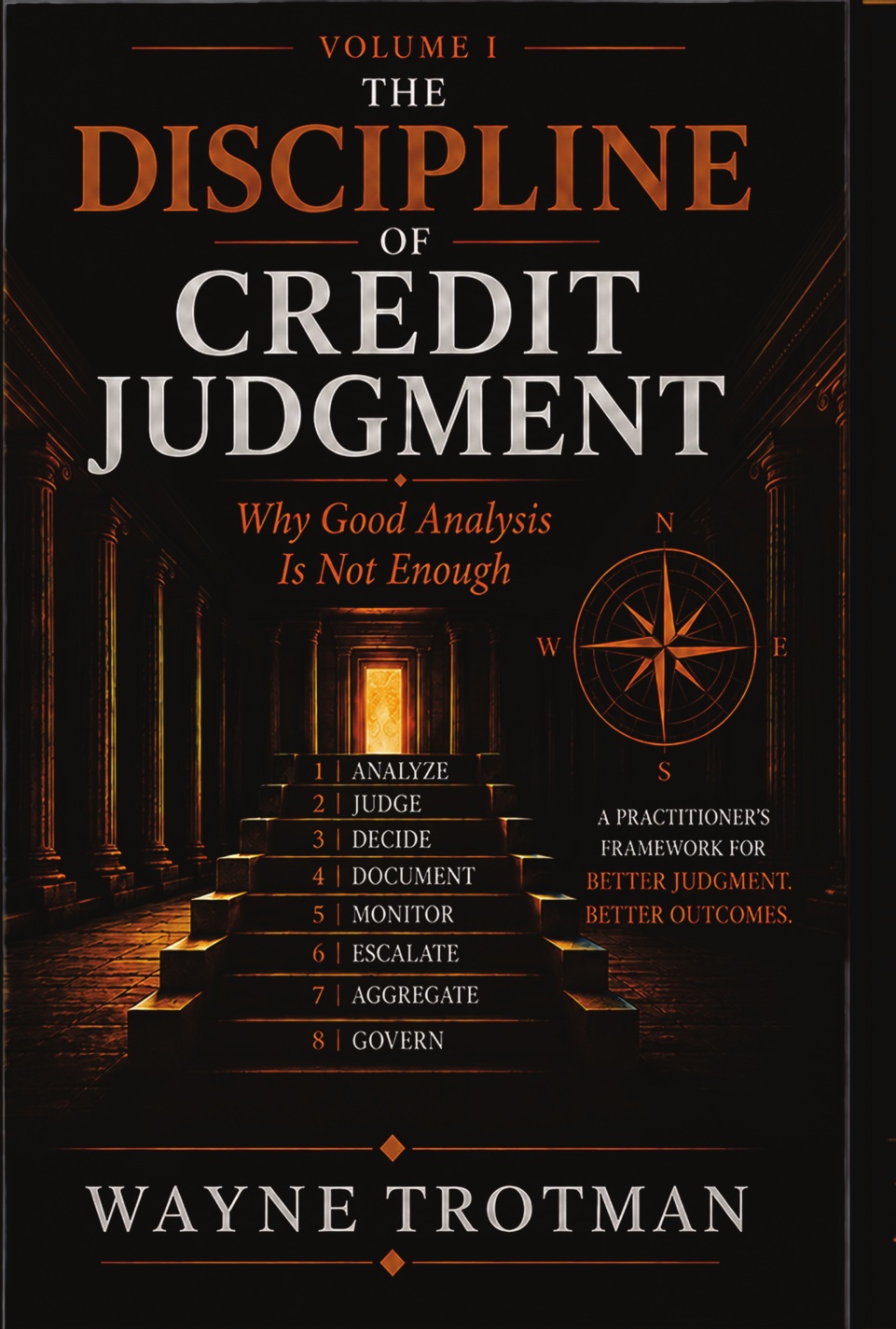
The Discipline of Credit Judgment examines which facts matter most, which assumptions deserve challenge, what can cause repayment to fail, how uncertainty should influence structure, what constitutes sufficient evidence, and how institutions can make judgment more consistent without reducing analysis to a checklist.
Framework
Understand the evidence and identify what matters.
Interpret the evidence, challenge assumptions, and form a view.
Reach a clear, defensible credit decision.
Record the analysis, rationale, structure, and decision evidence.
Track performance, risk drivers, and early-warning indicators.
Act when the evidence changes or risk moves outside expectations.
Understand what individual exposures mean together at portfolio level.
Apply oversight, authority, accountability, and institutional discipline.